The Stage Picture: A Silent Conversation Between Bodies
A stage picture lets spacing, levels and focus tell a story before dialogue begins. Learn to sketch contrasting arrangements and read their effect.
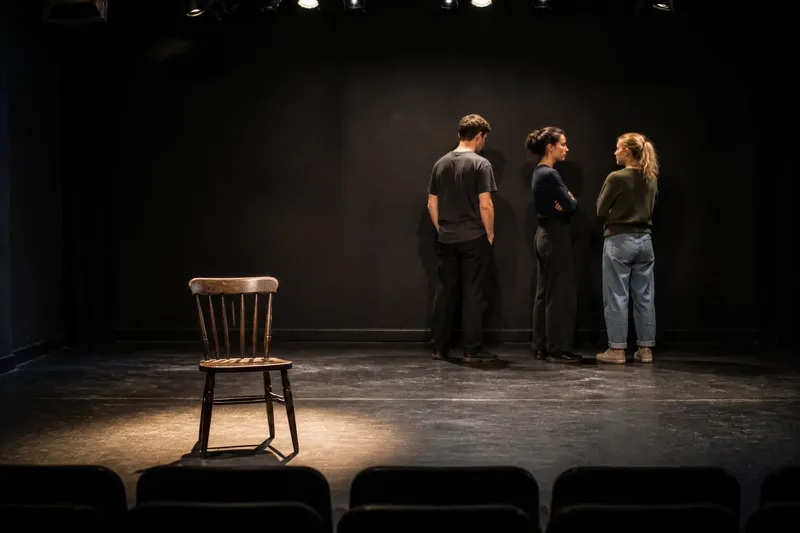
A chair sits alone downstage while three performers gather near the back wall. Before anyone speaks, the room feels divided: one person exposed, the others together. That is the stage picture at work. In amateur theatre, a deliberate arrangement of bodies can guide attention and suggest a relationship before a line is heard.
Try treating each arrangement as a silent conversation. Spacing, levels and the direction performers face are its vocabulary; the audience reads the whole picture at once, then keeps reading as it changes. The numbered ideas below offer practical ways to shape that conversation, followed by a simple exercise in sketching two contrasting arrangements.
1. Give the audience a place to look
A stage picture is not simply a group of people standing in a scene. It is the arrangement of performers across the acting space at a particular moment, including their distance from one another, their relative height and where their attention points. Like a table setting, it can make one place feel central without putting a sign above it.
Ask what the audience should notice first. A performer can draw focus by standing apart, occupying a clear patch of space or being the only person looking towards a particular point. The effect need not make that performer “more important” in the story; it may instead create a question, such as why the group has turned away from them.
Look at the picture from the audience’s view, rather than judging it only from the stage. A formation that feels clear to performers facing one another may look like a row of backs from the seats. If practical, ask someone to watch from the room while the group holds still. Their first impression can help you see where attention lands.
2. Use spacing to suggest connection or distance
Space between performers is visible information. People standing close may seem allied, protective, crowded or in conflict; people far apart may seem isolated, wary or simply engaged in separate tasks. The meaning depends on the scene, so decide what you want the distance to suggest rather than assuming closeness always means affection.
Notice the shape of the gaps, too. A narrow opening between two performers can feel like a barrier, while a broad empty area can become a striking absence. A group arranged in a loose cluster gives a different impression from the same group spread across the stage. Small adjustments matter because an audience reads relative positions, not just the number of steps between people.
When trying an arrangement, begin with a clear contrast. Put two performers close together and a third at a remove, then ask what relationship the picture suggests. If the answer fits the scene, consider whether the distance should stay fixed or change as the moment develops. A shift closer or further away can make an unspoken decision visible.
3. Change levels without making a ladder of importance
Levels are the different heights at which performers appear: standing, sitting, kneeling or using a safe, suitable platform where the space allows. A change in height can make a picture more varied and can draw the eye towards a particular area. It also changes how bodies relate: someone seated while another stands may seem at ease, under pressure or simply in the middle of a practical task.
Avoid treating the tallest performer as automatically dominant and the lowest as automatically weak. Those readings are possible, but posture and context can overturn them. A seated performer who holds the group’s attention may seem to control the room; a standing performer who looks away might appear uncertain. Look at height alongside gaze, gesture and spacing.
Check that levels create a readable outline rather than a tangle of heads and shoulders. If several performers stand in a straight line, a seated figure may become visible at once. If everyone crouches, that level contrast disappears, though the shared low position may itself give the scene a purposeful shape. Choose variety for the meaning it supports, not just to make the stage look busy.
4. Let facing and gaze point beyond the dialogue
Where performers face can direct attention as strongly as where they stand. A performer facing the audience is easy to read, while a turned shoulder can suggest withdrawal or reserve. A group that looks towards one person makes that person a focal point; a group that looks elsewhere can make the empty space between them feel charged.
Facing does not have to mean staring. A performer can angle their body towards a door, a chair or another person while keeping their eyes elsewhere. That difference may suggest divided attention. If everyone turns towards the same imagined sound, the audience is likely to look in that direction too, even before a character explains what they heard.
Try changing one thing at a time. Keep the spacing and levels, but turn a pair towards each other; then turn them both towards the audience. Notice how the relationship shifts. This is a useful way to explore a scene without adding dialogue or complicated movement: the bodies make a different proposal, and the group can decide which one belongs.
5. Make one clear change at a time
A stage picture can contain several ideas, but too many competing signals make it hard to read. If every performer is isolated, changing level and looking in a different direction, the audience may not know which detail matters. Begin with a simple intention, such as “one person is left out”, then choose a few visible choices that support it.
Say a group is preparing to leave a room, but one performer has not joined them. Imagine the group gathered near an imagined doorway, while that performer sits at a distance and looks towards the others rather than the exit. The starting point is a clear separation; the action is to bring one group member’s attention back towards the seated performer; the expected observable result is that the audience’s gaze travels between the group and the person left behind. No line is needed to make that shift legible.
After each change, let the picture settle. A brief still moment gives the audience time to notice what has changed and gives the performers a chance to feel whether the arrangement is comfortable and repeatable. If the new image is unclear, simplify it: adjust a gap, turn a body or change a level, then look again.
6. Sketch two arrangements to compare their meaning
A quick sketch can help a group discuss a picture before moving furniture or trying a long sequence. Draw a simple rectangle for the acting area and mark the audience edge. Use circles or initials for performers, and add short arrows for the direction each person faces. A note such as “sitting” or “looking at door” can record a detail that a dot cannot show.
Make two drawings of the same moment with contrasting intentions. For example, one could show a character welcomed into a group; the other could show the same character excluded. Keep the scene’s people and objects the same, then alter spacing, levels and facing. The contrast makes it easier to see which choices change the audience’s reading.
- Name the moment. Write a brief description, such as “the group notices someone arrive”.
- Choose the first reading. Decide what you want the audience to sense before anyone speaks.
- Place the bodies. Mark who stands, sits or kneels, and show each person’s distance from the others.
- Add facing arrows. Indicate who looks at whom, towards the audience or towards an imagined point.
- Draw a contrasting version. Keep the moment but change the visible arrangement so it suggests a different relationship.
- Compare the sketches aloud. Ask what a viewer might notice first and what seems to be happening between the performers.
- Try the clearer picture in the room. Hold the arrangement, check its view from the audience area and make one adjustment if the intended focus is lost.
The sketches are prompts, not rules. A stage may have an awkward doorway, a narrow playing area or chairs that need to remain in place; work with the available space rather than forcing a drawing onto it. The useful question is whether the audience can read the important relationship from where they sit.
7. Which stage picture questions come up most often?
How do you make a stage picture without props?
Use performers’ positions, levels and gaze as the main materials. A gap, a shared direction of attention or one person at a different height can suggest a relationship without adding an object.
How can a group make one performer stand out?
Give that performer a distinct position or direction of focus, while keeping the surrounding arrangement simple. A clear difference often draws attention more effectively than adding several gestures at once.
What if the audience cannot see a performer’s face?
Turn the body enough for the face or gesture to read from the seats, unless hiding it is part of the intended effect. A watcher in the audience area can help identify a blocked view.
How often should a stage picture change?
Change it when the relationship or focus changes, not merely to keep bodies moving. A held picture can carry meaning, while a deliberate shift can make a new thought visible.
A stage picture is most useful when it gives the audience something specific to notice. Sketching two arrangements makes that choice visible to the performers as well: the same scene can suggest welcome or rejection, confidence or doubt, simply by changing how bodies share space. Keep the stage picture focused on one readable idea, and the silence before the first line can already begin the scene.