The Rehearsal Myth: More Runs Do Not Fix a Fuzzy Aim
A clearer rehearsal aim turns repeated scene runs into useful decisions, helping amateur casts spot what needs attention before they go again.
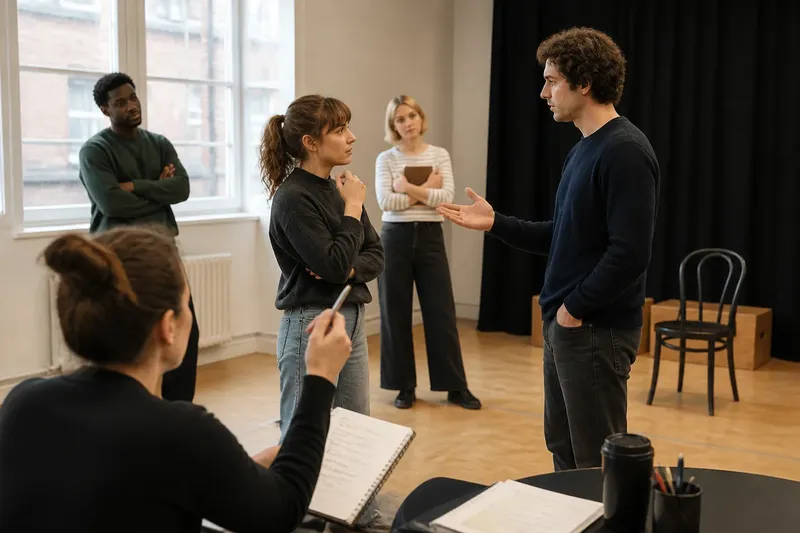
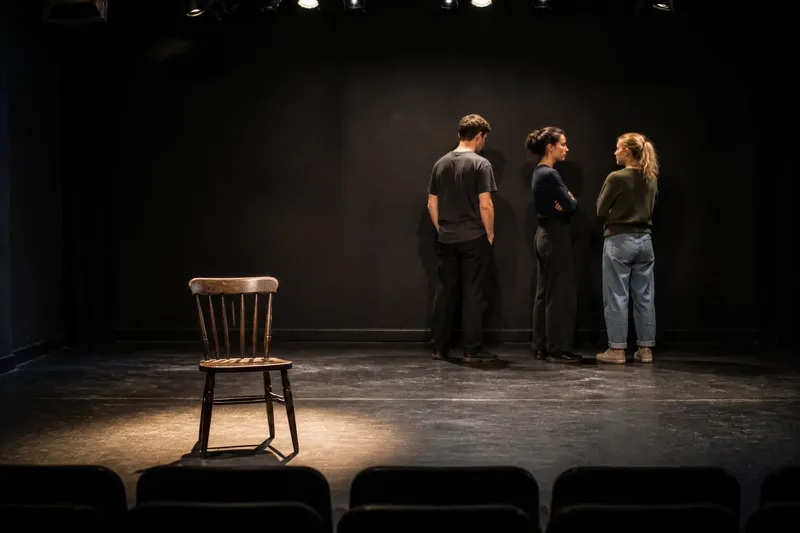
The cast reaches the end of the scene, someone says, “Shall we go again?”, and the actors return to their places. The same lines pass by, the same pause goes soft, and the same entrance feels late. A further run may help, but only if the room knows what it is trying to learn. In rehearsal, repeating a scene is not the same as improving it.
The useful shift is small: name one clear question before the next run. It gives actors something specific to notice and gives the director a reason to stop, adjust or move on. Without that question, repetition can make a vague choice feel familiar without making it clearer.
Does repeating a scene automatically make it better?
No. Repetition gives actors another chance to practise, but it does not tell them which part needs work. If the aim is unclear, they may repeat the same timing, emphasis and movement, reinforcing a choice that nobody has examined.
A run can still build confidence with lines or help actors find a rhythm. But those are particular aims, not automatic benefits. If the scene’s problem is that a character’s request seems unconvincing, reciting the dialogue again may not address it. The cast needs to investigate what the character wants, what gets in the way and what changes as the exchange unfolds.
Think of rehearsal like sharpening a pencil: another pass only helps if the point is meeting the sharpener at the right angle. More turns alone do not tell you whether the result is useful.
What makes a rehearsal aim clear?
A clear aim is a question that can be explored in the next run and answered through something visible or audible. It focuses attention without dictating every choice. “Make this scene stronger” is too broad; “Can the audience hear the change in Mara’s attitude after the letter is mentioned?” offers actors a specific thing to try and observers a specific thing to notice.
Useful questions often concern one of these areas:
- Intention: What is the character trying to get from the other person in this exchange?
- Change: At what moment does the character’s approach shift?
- Listening: Does the next line respond to what was just said, or arrive as a memorised cue?
- Clarity: Can the audience follow who knows what, and when?
- Stage action: Does a movement or pause help the scene’s meaning, or distract from it?
Pick one, not all five. A question about listening may reveal a problem with intention, but the cast can return to that later. A rehearsal aim is a torch, not a floodlight: it should light the patch of work directly in front of the company.
How should a director choose the next question?
Choose the question from the scene the audience will actually see, not from a general wish for better acting. Ask what currently prevents the moment from landing. Is the relationship unclear? Does a revelation pass without effect? Are actors speaking over a change in mood? The most useful question is usually the one tied to the clearest obstacle.
Then make the question narrow enough to test in one run. “Is the argument believable?” could mean anything from vocal volume to a character’s reason for staying. “Can Eli keep trying to leave while Jo gives him a reason to stay?” points towards a playable conflict and a visible choice.
Say you are rehearsing an invented scene in which a caretaker asks a neighbour to return a borrowed key. The first run feels polite, though the text suggests the caretaker is worried. Before the next run, the director asks, “Can the caretaker hide their worry until the neighbour mentions the locked room?” The actors can then explore restraint and the effect of that line. Afterward, the room can discuss whether the worry became readable at the intended moment, rather than simply deciding that the scene was “better” or “worse”.
What should actors do differently on the next run?
Keep the scene alive rather than treating the question as a cue to demonstrate one approved answer. Actors can choose a playable action—such as persuading, testing or avoiding—and see how it changes their responses. The aim is to explore a possibility, not to manufacture a result for the director.
Before starting, agree what the room will watch for. If the question concerns a shift in attitude, observers might note the line or action where they sensed it. If it concerns a character’s attempt to leave, they can notice whether the resistance gives that attempt a reason to change. Specific observations are more useful than “That felt stronger.”
After the run, ask a short follow-up: what happened, and what remains uncertain? The answer may be that the change was clear but arrived too soon, or that the actor’s intention was playable but the other character did not respond. Either answer can shape the next question. Avoid piling several new notes onto the same run; that scatters attention and makes it hard to know which choice produced what effect.
How can a cast tell whether to repeat, adjust or move on?
Repeat when the same question is still worth exploring and the actors have a fresh choice to try. Adjust when the run exposes a more precise obstacle. Move on when the question has been answered well enough for now, even if the scene still has rough edges.
“Answered” does not mean perfect. It means the company can describe what changed and what the next useful task is. A scene may need another pass for cue timing after its central relationship becomes clearer; that is a different aim from the one that guided the previous run.
If the same question produces no new information, do not reflexively send the cast around again. Pause and check whether the question is too broad, the actors lack a concrete action to try, or the scene needs a practical adjustment such as space to cross safely. The answer might be to talk briefly, alter a rehearsal condition or set the moment aside until a related scene clarifies it.
Which rehearsal questions help with common problems?
What if the scene feels flat?
Ask what each character wants from the other in the moment, then see whether the actors pursue those aims through distinct actions. “Flat” describes an impression; a playable question gives the cast something to do.
What if the actors keep missing their cues?
Ask what they are listening for before the cue arrives, rather than telling them simply to be quicker. They may need to respond to a change in the other actor’s thought, not just wait for a familiar final word.
What if everyone has a different opinion?
Turn the disagreement into an observable question, such as where the audience should first suspect a character is lying. Try one clear version, then compare what the room actually noticed.
What if the scene is not ready to run?
Work on a smaller piece: a difficult exchange, an entrance, or the moment before a decision. A whole-scene run is not required when the useful question concerns only a few lines or actions.
How can a small amateur company keep this habit useful?
Keep the process light. A director can state the question in a sentence, ask an actor to repeat it back in their own words, and invite one observer to watch for the chosen detail. A scrap of paper beside the script can hold the question and the next decision: repeat, adjust or move on.
For actors rehearsing without a director, take turns naming the question and watching one run. The person observing should describe what they saw before offering an interpretation: “You looked at the door after the warning” is more useful than “You seemed nervous”. Concrete observation leaves room for the actor to decide what to change.
One focused question will not solve every rehearsal problem, but it can make the next run count. Before anyone returns to their mark, ask what the room needs to learn from the scene. That brief pause can save the cast from repeating a choice merely because it is familiar, and leave them with a clearer decision for the work ahead.